Mariegola
Mariegola
Chiara Famengo (ed.)
Couldn't load pickup availability
Con/ With Barena Bianca, Fulvia Larena, Chiara Famengo, Tocia! Cucina e Comunità
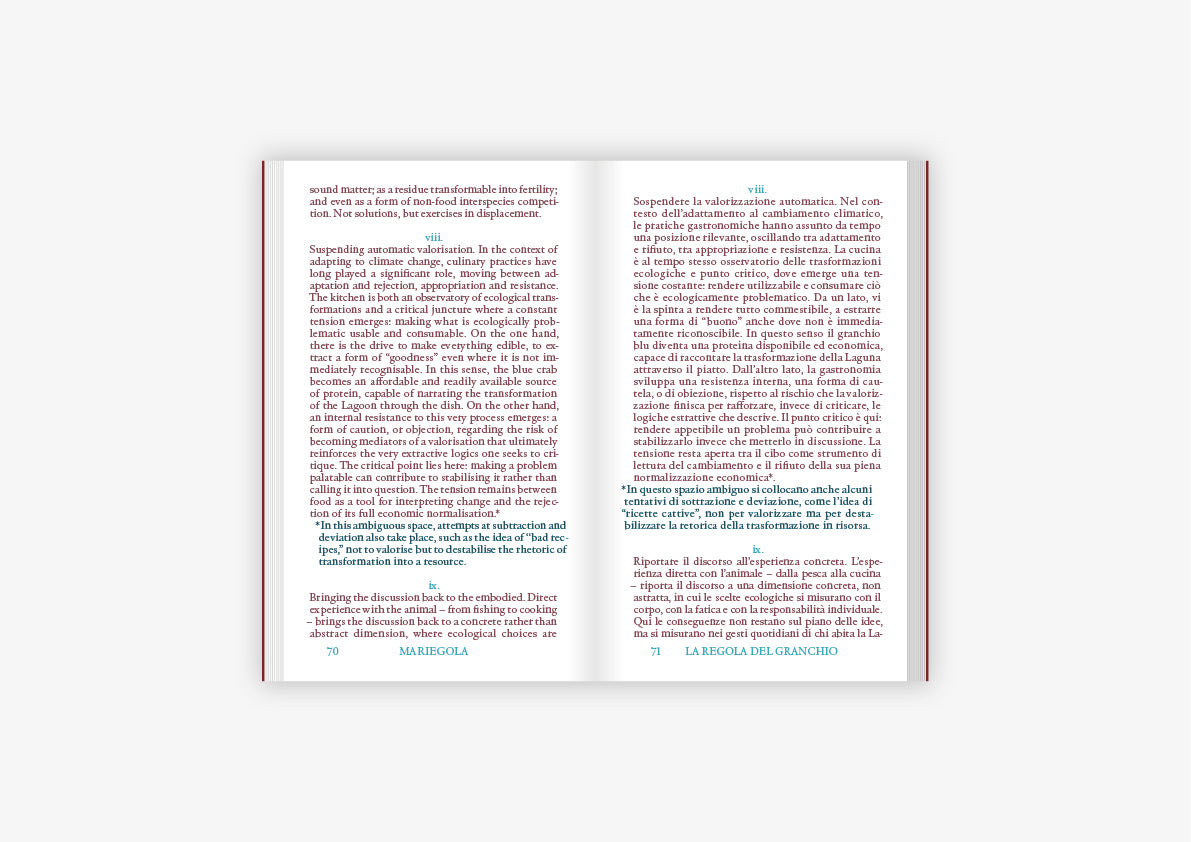
Between the 16th and 18th century, every Venetian guild kept its own mariegola: a register listing the names of its members and the statute of rules and customs through which the community governed its shared life. Mariegola, edited by Chiara Fiamengo with Barena Bianca, Fulvia Larena and Tocia! Cucina e Comunità, takes up this historic form to draw up a new kind of statute, one that includes the more-than-human beings with whom Venice shares its waters. Conceived as a collective effort and a declaration of intent, the book questions the ecological changes reshaping the lagoon and its ecosystem. It moves the human gaze away from the centre to make room for the other presences that now inhabit and transform the lagoon and the lives of those who live there. The leading roles go to the Manila clam, the oyster, the blue crab and algae, each a witness to a rapidly changing lagoon ecosystem. Illustrated by Giuseppe Abate and accompanied by marginal notes that echo the structure of the ancient mariegole, the book is a first but significant step towards thinking ecologically about the radical changes Venice is going through, and about the forms of coexistence these changes demand: “An invitation to inhabit transformations without claiming to dominate them. An attempt to return to listening to the Lagoon, recognising it as a subject with whom to continually negotiate the conditions of our presence.”
Tra il Cinquecento e il Settecento, ogni scuola di mestiere veneziana custodiva la propria mariegola, un registro in cui venivano annotati i nomi dei confratelli e lo statuto di norme e consuetudini con cui la comunità regolava la propria convivenza. Mariegola, a cura di Chiara Fiamengo con Barena Bianca, Fulvia Larena e Tocia! Cucina e Comunità, riprende questa forma storica per redigere un nuovo statuto, che includa anche gli esseri più-che-umani con cui Venezia condivide le sue acque. Pensato come uno sforzo collettivo e una dichiarazione d’intenti, il libro interroga i cambiamenti ecologici che stanno trasformando la laguna e il suo ecosistema. I protagonisti sono la vongola filippina, l’ostrica, il granchio blu e le alghe, ciascuno testimone di un ecosistema lagunare in rapida trasformazione. Illustrato da Giuseppe Abate e accompagnato da note a margine che riprendono la struttura delle antiche mariegole, il libro rappresenta un primo ma importante passo per riflettere in chiave ecologica sui mutamenti radicali che Venezia sta vivendo e sulle forme di convivenza che questi cambiamenti richiedono: “Un invito ad abitare le trasformazioni, senza pretendere di dominarle. Un tentativo per tornare ad ascoltare la Laguna, riconoscendola come soggetto con cui negoziare continuamente le condizioni della nostra presenza”.
ISBN 978-88-99058-96-8
2026 Italiano, English
11 × 18,3 cm, 104 pages
2 colors offset
Softcover
Share